











FOMO: When the Fear of Missing Out Affects Mental Well-Being
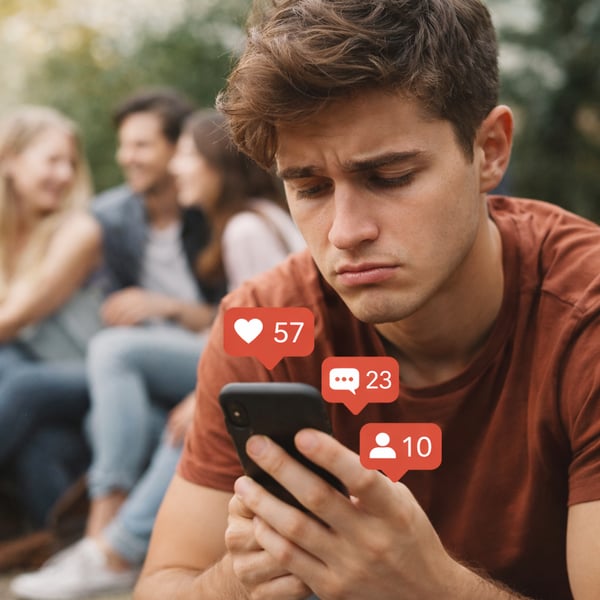
The digital era has profoundly transformed the way we communicate, share experiences, and relate to others. Today, through social media and mobile applications, we are constantly exposed to moments from other people’s lives: trips, professional achievements, social gatherings, and leisure activities.
This continuous flow of information has contributed to the emergence of a psychological phenomenon that is increasingly studied: FOMO — Fear of Missing Out.
Although it is a common experience, FOMO can have important consequences for emotional well-being, particularly when it is associated with intensive social media use and constant comparison with others.
By Paulo Pacheco (Farmacêutico)
Edited by 2026-03-09
FOMO: When the Fear of Missing Out Affects Mental Well-Being
The digital era has profoundly transformed the way we communicate, share experiences, and relate to others. Today, through social media and mobile applications, we are constantly exposed to moments from other people’s lives: trips, professional achievements, social gatherings, and leisure activities.
This continuous flow of information has contributed to the emergence of a psychological phenomenon that is increasingly studied: FOMO — Fear of Missing Out.
Although it is a common experience, FOMO can have important consequences for emotional well-being, particularly when it is associated with intensive social media use and constant comparison with others.
By Paulo Pacheco (Farmacêutico)
Edited by 2026-03-09
What is FOMO?
The term Fear of Missing Out (FOMO) refers to a persistent feeling that other people may be having rewarding experiences from which we are absent.
This feeling can generate a constant need to stay updated on what others are doing, repeatedly check social media, or remain continuously available so as not to miss social opportunities.
The concept was first explored in academic research in social psychology and gained particular relevance with the expansion of social media and digital communication.
Why do we experience FOMO?
Scientific research suggests that FOMO results from a combination of psychological and social factors.
Social comparison
Human beings naturally tend to compare themselves with others. On social media, this comparison becomes more intense because we are mostly exposed to the positive moments of other people’s lives.
As a result, people may develop the perception that others are living more exciting, successful, or fulfilling experiences.
The need to belong
Another important factor is the human need for social connection. Psychological research identifies belonging to social groups as a fundamental component of emotional well-being.
When individuals feel they may be missing social experiences or opportunities for connection, feelings of anxiety or discomfort may arise.
Constant stimulation from social media
Digital platforms are designed to capture attention and encourage continuous interaction. Notifications, updates, and constantly refreshed content stimulate curiosity and reinforce frequent checking behaviours.
This environment can intensify the perception that something important is always happening elsewhere.
FOMO and mental health
In recent years, several studies have explored the relationship between FOMO and psychological well-being.
Higher levels of FOMO have been associated with:
-
increased anxiety
-
higher psychological stress
-
lower life satisfaction
-
reduced self-esteem
-
more compulsive use of social media
FOMO may also contribute to sleep disturbances, as many individuals develop the habit of repeatedly checking their smartphones, including during the night.
This pattern can create an unhealthy relationship with technology and reinforce feelings of dissatisfaction or social comparison.
Who is more vulnerable to FOMO?
Although anyone can experience FOMO, certain factors may increase vulnerability.
These include:
-
intensive social media use
-
lower self-esteem
-
heightened sensitivity to others’ opinions
-
a tendency toward social comparison
-
younger age groups, particularly adolescents and young adults
These stages of life are especially sensitive to identity development and social validation.
How to manage FOMO in a healthy way
In a digitally connected world, completely avoiding FOMO may not be realistic. However, its impact can be reduced through conscious habits.
Some useful strategies include:
Developing digital awareness
Recognising that social media often presents only a selective version of reality can help reduce unrealistic comparisons.
Setting limits on social media use
Establishing periods of the day without social media or notifications may help break the cycle of constant checking.
Valuing the present moment
Focusing on real-life experiences — conversations, activities, or moments of rest — can reduce the feeling of always missing out.
Strengthening real-world relationships
Face-to-face interactions remain one of the most important factors for emotional well-being.
From FOMO to JOMO
In recent years, another concept has emerged: JOMO — Joy of Missing Out.
JOMO represents the ability to accept that it is impossible to participate in everything and to find satisfaction in moments of rest, reflection, or personal activities.
This concept encourages a more balanced lifestyle that is less dependent on constant social validation.
Conclusion
FOMO is a psychological phenomenon that naturally arises in an increasingly connected world. Constant exposure to other people’s experiences may intensify feelings of comparison and the perception that we are missing opportunities.
However, developing a more conscious relationship with technology and valuing real experiences can help reduce this impact.
Promoting digital balance is now an important component of mental health and overall well-being.
Sources
This article is based on scientific research and international literature on the Fear of Missing Out (FOMO), including studies published in journals such as Frontiers in Psychology, Computers in Human Behavior, PLOS ONE and Journal of Behavioral Addictions, as well as academic research on social psychology and digital behaviour.