






Oral Thrush in Babies: What Parents Need to Know
The first months of a baby’s life often bring many questions and concerns for parents. One common issue is the appearance of oral thrush, a frequent oral infection in infancy. Although it may look worrying at first, oral thrush is usually a mild condition and is easy to treat when identified early.
In this article, we explain what oral thrush is, how to recognise it, why it occurs, and how it can be treated and prevented.
By Paulo Pacheco (Farmacêutico)
Edited by 2026-01-17
Oral Thrush in Babies: What Parents Need to Know
The first months of a baby’s life often bring many questions and concerns for parents. One common issue is the appearance of oral thrush, a frequent oral infection in infancy. Although it may look worrying at first, oral thrush is usually a mild condition and is easy to treat when identified early.
In this article, we explain what oral thrush is, how to recognise it, why it occurs, and how it can be treated and prevented.
By Paulo Pacheco (Farmacêutico)
Edited by 2026-01-17
What is oral thrush?
Oral thrush is the common name for oral candidiasis, an infection caused by an overgrowth of the fungus Candida albicans in the mouth. This microorganism is normally present in the body, but it can multiply excessively when there is an imbalance, particularly in babies whose immune systems are still developing.
Oral thrush is most common during the first months of life but may occur at any age, especially after certain medications or in situations of reduced immunity.
Common signs and symptoms
Typical signs of oral thrush in babies include:
-
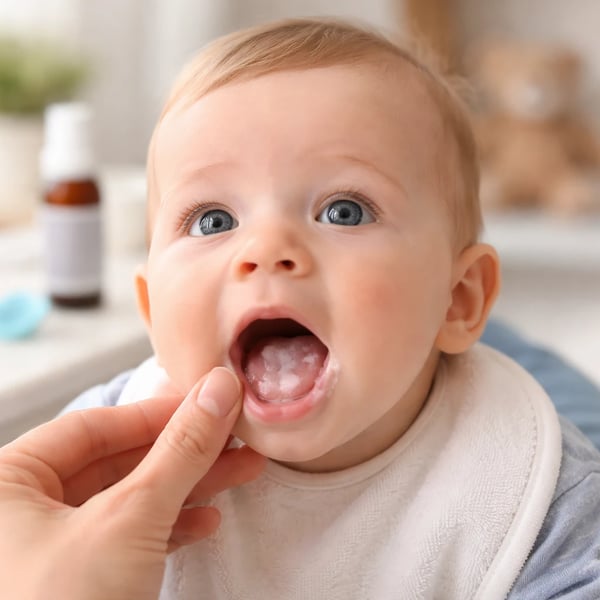
White patches on the tongue, gums, inside the cheeks, or roof of the mouth
-
A cottage cheese–like appearance that does not easily wipe away
-
Fussiness or discomfort during feeding
-
Reduced appetite or difficulty sucking
-
Redness or small cracks at the corners of the mouth
👉 Important: Milk residue usually wipes away easily, unlike thrush-related patches.
Why does oral thrush occur in babies?
Several factors may contribute to the development of oral thrush:
-
Immature immune system, especially in newborns
-
Use of antibiotics, which can disrupt the natural oral microbiota
-
Inhaled corticosteroids, if oral hygiene is not performed afterward
-
Poorly cleaned pacifiers, bottle nipples, or teething toys
-
Transmission during breastfeeding, if the mother has nipple candidiasis
Warm, moist environments favour fungal growth.
How long does oral thrush last?
With appropriate treatment, oral thrush usually clears within 7 to 14 days.
If left untreated or if predisposing factors persist, the infection may last longer or recur.
How is oral thrush treated?
Treatment should always be guided by a doctor, preferably a paediatrician. Common measures include:
-
Topical antifungal medications, such as oral suspensions (e.g. nystatin), prescribed by a healthcare professional
-
Careful oral hygiene, even in babies without teeth
-
Regular sterilisation of pacifiers, bottles, nipples, and toys
-
Treatment of the breastfeeding mother, if nipple symptoms such as pain, redness, or cracking are present
⚠️ Breastfeeding should usually continue unless otherwise advised by a doctor.
How can oral thrush be prevented?
While not all cases can be prevented, the following measures help reduce risk:
-
Washing hands thoroughly before and after feeding
-
Sterilising items that go into the baby’s mouth
-
Gently cleaning the baby’s mouth when recommended
-
Avoiding unnecessary antibiotic use
-
Seeking medical advice at the first signs of oral changes
When should you see a doctor?
Medical advice should be sought if:
-
White patches persist for several days
-
The baby appears uncomfortable or refuses feeds
-
Thrush keeps returning
-
The breastfeeding mother experiences nipple pain or lesions
Diagnosis is usually clinical, and early treatment leads to rapid improvement.
Conclusion
Oral thrush is a common and generally harmless condition in babies. Early recognition, proper hygiene and appropriate treatment allow for quick resolution, restoring comfort for the baby and peace of mind for parents.
Whenever symptoms persist or doubts arise, medical advice is essential to ensure safe and effective care.
Sources
This article is based on scientific evidence and international recommendations from organisations such as the World Health Organization (WHO), American Academy of Pediatrics (AAP), National Health Service (NHS), and medical literature published in journals including Pediatrics, BMJ and the Journal of Pediatric Infectious Diseases.