0
Loading...
There are no products in the cart

Shipping from €1.5 and free for orders over 40 €

Sign up and receive a €5 voucher in your email

Travel Health Consultation: How to Prepare Before Travelling

Introduction

Travelling is one of the best ways to discover new places, rest, work, or visit family. However, each destination may bring specific health risks, which vary depending on the country, region, time of year, length of stay, and planned activities.

A travel health consultation helps prepare your trip safely through an individual risk assessment. It is not only about receiving vaccines: it helps identify risks, plan preventive measures, review regular medication, and clarify important questions before departure.

Preparing your health before travelling is just as important as organising documents, flights, or accommodation.

By Paulo Pacheco (Farmacêutico)

Edited by 2026-06-15
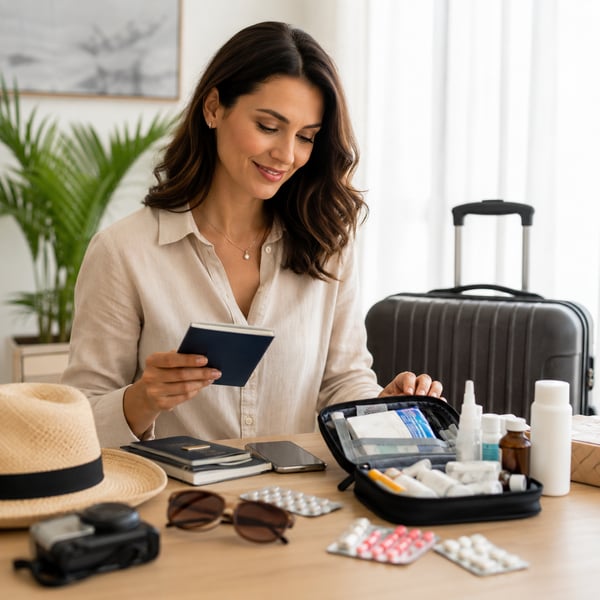
Travel Health Consultation: How to Prepare Before Travelling

Travel Health Consultation: How to Prepare Before Travelling

Introduction

Travelling is one of the best ways to discover new places, rest, work, or visit family. However, each destination may bring specific health risks, which vary depending on the country, region, time of year, length of stay, and planned activities.

A travel health consultation helps prepare your trip safely through an individual risk assessment. It is not only about receiving vaccines: it helps identify risks, plan preventive measures, review regular medication, and clarify important questions before departure.

Preparing your health before travelling is just as important as organising documents, flights, or accommodation.

By Paulo Pacheco (Farmacêutico)

Edited by 2026-06-15


Share:

What is a travel health consultation?

A travel health consultation is a medical appointment for people who are planning to travel, especially to destinations where health risks differ from those usually found in Portugal.

During the consultation, several factors are assessed:

  • destination and itinerary;
  • length of stay;
  • time of year;
  • type of accommodation;
  • purpose of travel;
  • planned activities;
  • traveller’s age;
  • general health status;
  • chronic diseases;
  • pregnancy or breastfeeding;
  • regular medication;
  • vaccination history;
  • risk of exposure to mosquitoes, food, water, animals, or specific environments.

Based on this assessment, vaccines, preventive medication, food and water precautions, insect bite prevention, and other measures may be recommended to reduce the risk of illness or accidents.


When should you book the consultation?

Ideally, the travel health consultation should be booked 4 to 8 weeks before departure. This timeframe allows enough time to assess risks, administer vaccines that may take several days or weeks to provide protection, and start preventive medication when needed.

Even if the trip is approaching, it is still worth seeking advice. Some measures can be taken only a few days before departure and may still be useful.

In Portugal, travel health consultations are available through National Health Service units, international vaccination centres, and private healthcare providers offering this service. In some cases, prior booking is required.


Vaccines: each destination requires individual assessment

Not every trip requires additional vaccines. Recommendations depend on the destination, local conditions, and the traveller’s profile.

A travel health consultation helps confirm whether the National Vaccination Programme is up to date and assess whether specific travel vaccines are needed.

Vaccines that may be considered include:

  • hepatitis A;
  • hepatitis B;
  • typhoid fever;
  • yellow fever;
  • rabies;
  • Japanese encephalitis;
  • meningococcal disease;
  • poliomyelitis;
  • tetanus, diphtheria, and whooping cough;
  • measles, mumps, and rubella;
  • influenza;
  • COVID-19, according to updated recommendations.

The yellow fever vaccine deserves special attention. In some countries, an International Certificate of Vaccination or Prophylaxis may be required for entry. This vaccine must be administered in authorised centres and, when applicable, should be given sufficiently in advance of travel.


Malaria and mosquito-borne diseases

Some destinations carry a risk of malaria. In these cases, the doctor may recommend preventive medication, also known as antimalarial chemoprophylaxis.

The choice of medication depends on several factors:

  • country and region visited;
  • local resistance to antimalarial medicines;
  • length of stay;
  • age;
  • pregnancy;
  • pre-existing medical conditions;
  • regular medication;
  • possible interactions and side effects.

In addition to malaria, mosquitoes can transmit other infections such as dengue, chikungunya, Zika, yellow fever, and Japanese encephalitis. For many of these diseases, prevention relies mainly on avoiding mosquito bites.

Useful measures include:

  • using an appropriate insect repellent;
  • reapplying repellent according to the product instructions;
  • wearing light, long-sleeved, light-coloured clothing;
  • sleeping in places with mosquito nets or air conditioning;
  • avoiding areas with stagnant water;
  • reinforcing protection during the hours when mosquitoes are most active.

Traveller’s diarrhoea: one of the most common problems

Traveller’s diarrhoea is one of the most frequent complaints during international travel. It may occur after consuming contaminated water or food, particularly in places where hygiene and sanitation conditions differ from those usually found at home.

To reduce the risk:

  • drink bottled or treated water;
  • avoid ice of unknown origin;
  • avoid raw foods that may not have been properly washed;
  • choose food that is well cooked and served hot;
  • wash hands frequently;
  • use alcohol-based hand sanitiser when soap and water are not available;
  • be cautious with street food, raw seafood, and buffets.

A travel health consultation can also help prepare a small gastrointestinal kit, including oral rehydration solutions and appropriate medication. Antibiotics or other specific medicines should only be used when recommended by a healthcare professional.


Regular medication: what to prepare before travelling

Anyone taking regular medication should plan ahead.

Important recommendations include:

  • taking enough medication for the whole trip, plus a few extra days;
  • carrying medication in hand luggage;
  • keeping medicines in their original packaging;
  • taking a prescription or medical statement, if needed;
  • checking destination-country rules for controlled medicines;
  • confirming storage conditions, especially for medicines requiring refrigeration;
  • adjusting medication schedules when travelling across major time zones.

This is particularly important for people with diabetes, cardiovascular disease, asthma, epilepsy, autoimmune disease, psychiatric conditions, or other chronic illnesses.


Children, pregnant travellers, and people with chronic diseases

Not all travellers have the same level of risk.

Children, pregnant travellers, older adults, immunocompromised people, and those with chronic diseases should receive individualised advice. Some vaccines may not be indicated in certain situations, and some preventive medicines may require additional precautions.

In these cases, a travel health consultation is especially important to balance the benefits of travel with the safety of preventive measures.


Other risks that are often forgotten

A travel health consultation is not only about infections. Many travel-related health problems are linked to accidents, climate, altitude, water, animals, or risk behaviours.

Issues to consider include:

  • road safety;
  • helmet use when riding motorcycles or bicycles;
  • risk of animal bites;
  • intense sun exposure;
  • extreme heat and dehydration;
  • altitude;
  • diving;
  • contact with freshwater in risk areas;
  • alcohol or substance use;
  • sexual health and prevention of sexually transmitted infections.

In some destinations, rabies is an important concern. Avoid touching unfamiliar animals, even if they appear friendly.


Travel insurance and access to healthcare abroad

Before travelling, you should confirm whether you have appropriate coverage in case of illness or accident.

Within the European Union and some associated countries, the European Health Insurance Card may facilitate access to public healthcare under the applicable conditions. However, it does not necessarily replace travel insurance, especially when private care, repatriation, trip cancellation, or broader assistance may be needed.

For destinations outside Europe, appropriate travel insurance is particularly important.


What should you include in a travel health kit?

The contents of a travel health kit depend on the destination, trip duration, and traveller’s characteristics. However, it may include:

  • regular medication;
  • pain reliever and fever medicine;
  • oral rehydration solutions;
  • antidiarrhoeal medication, when appropriate;
  • insect repellent;
  • sunscreen;
  • products for sunburn;
  • basic wound dressing materials;
  • skin disinfectant;
  • thermometer;
  • condoms;
  • preventive medication prescribed during the consultation, when applicable.

A pharmacy can help adapt this kit to individual needs and destination-specific risks.


After the trip: when should you seek help?

Some symptoms may only appear after returning home.

You should seek medical assessment if, after travelling, you develop:

  • fever;
  • persistent diarrhoea;
  • vomiting;
  • skin rashes;
  • jaundice;
  • persistent cough;
  • unexplained weight loss;
  • wounds that do not heal;
  • symptoms after contact with animals;
  • significant malaise after staying in a tropical area.

Fever after travel to a malaria-risk area should always be taken seriously and assessed promptly.


Conclusion

A travel health consultation is much more than a vaccination appointment. It is a personalised assessment that helps anticipate risks, prevent illness, and travel more safely.

Each destination has its own risks, and each traveller has different needs. For this reason, preparing your health before departure should be part of every travel plan.

Travelling well begins before leaving home.


Sources

This article is based on updated recommendations and information from national and international organisations such as the World Health Organization (WHO), Centers for Disease Control and Prevention (CDC Travelers’ Health), European Centre for Disease Prevention and Control (ECDC), the Portuguese National Health Service (SNS/SNS24), and medical literature on travel medicine, international vaccination, malaria prevention, and travel health.


Our Blogs