











Back to School and Childhood Infections: How to Reduce the Risk and Know When to Seek Medical Help
Introduction
Going back to school and daycare means reunions, new routines and many hours of learning and play. It also means spending more time in close contact with other children, creating more opportunities for viruses and other microorganisms to spread.
The start of the school year also coincides with the approach of fall and winter, when several respiratory infections become more common. Common colds, influenza, gastroenteritis and infections caused by respiratory syncytial virus (RSV) are among the illnesses that may occur more frequently at this time of year.
It is not possible to prevent every infection, nor should that be the goal. However, some simple measures can help reduce transmission.
It is equally important for parents and caregivers to recognize when a child can be cared for at home and when medical assessment is needed.
By Paulo Pacheco (Farmacêutico)
Edited by 2026-09-08
Back to School and Childhood Infections: How to Reduce the Risk and Know When to Seek Medical Help
Introduction
Going back to school and daycare means reunions, new routines and many hours of learning and play. It also means spending more time in close contact with other children, creating more opportunities for viruses and other microorganisms to spread.
The start of the school year also coincides with the approach of fall and winter, when several respiratory infections become more common. Common colds, influenza, gastroenteritis and infections caused by respiratory syncytial virus (RSV) are among the illnesses that may occur more frequently at this time of year.
It is not possible to prevent every infection, nor should that be the goal. However, some simple measures can help reduce transmission.
It is equally important for parents and caregivers to recognize when a child can be cared for at home and when medical assessment is needed.
By Paulo Pacheco (Farmacêutico)
Edited by 2026-09-08
Why do infections spread so easily in schools and daycare centers?
In schools and daycare centers, many children spend several hours together in shared spaces, play in close proximity and use the same objects and surfaces.
In younger children, good hand hygiene and respiratory etiquette are also habits that are still being developed.
Not all infectious agents are transmitted in the same way.
Respiratory viruses can spread through respiratory secretions and particles released when breathing, speaking, coughing or sneezing, as well as through contact with contaminated hands, objects or surfaces.
Some gastrointestinal infections, on the other hand, may be transmitted through the fecal-oral route, person-to-person contact, or contaminated food, water and surfaces.
This is why simple measures such as proper handwashing, good respiratory etiquette and adequate ventilation remain important.
Common cold or influenza: they are not the same
The terms are sometimes used as though they mean the same thing, but the common cold and influenza are different infections.
With a common cold, symptoms mainly affect the upper respiratory tract and may include:
- a blocked or runny nose;
- sneezing;
- throat irritation or sore throat;
- cough;
- mild malaise.
Symptoms tend to develop gradually.
Influenza, caused by influenza viruses, usually has a more sudden onset and may cause fever, more pronounced malaise, muscle aches, headache and cough.
Children may also experience gastrointestinal symptoms such as vomiting or diarrhea.
Although both conditions are usually self-limiting, influenza can cause more significant illness and complications, particularly in people who are more vulnerable.
Respiratory syncytial virus: why does it deserve particular attention in babies?
Respiratory syncytial virus, or RSV, is a very common cause of respiratory infection in children.
In many children, it causes only symptoms similar to those of a common cold, but it can also cause bronchiolitis or pneumonia.
The risk of severe disease is higher during the first months of life, in premature babies and in children with certain medical conditions.
In Portugal, RSV circulation is predominantly seasonal and generally occurs between October and March.
RSV immunization in 2026/2027
For the 2026/2027 season, there is particularly relevant information for families with babies.
In September 2026, the Portuguese Directorate-General of Health (DGS) published the seasonal pediatric RSV immunization campaign for fall and winter 2026/2027.
Pediatric immunization is provided with nirsevimab, a long-acting monoclonal antibody.
Unlike a vaccine, this antibody directly provides antibodies against RSV, conferring passive immunity for several months.
For the 2026/2027 campaign, all children born between April 1, 2026 and March 31, 2027 are eligible, as are certain premature babies and children with conditions that increase the risk of severe RSV disease, according to the criteria established by the DGS.
RSV vaccination during pregnancy is also available. When maternal vaccination has been given sufficiently in advance of delivery, administration of the monoclonal antibody to the newborn is not required in most situations, although there are specific clinical exceptions.
The most appropriate protection strategy should be determined by healthcare professionals according to each individual situation.
Gastroenteritis: vomiting and diarrhea are also common
Gastroenteritis is another common problem in childhood and may be caused by viruses, bacteria or parasites.
Symptoms may include:
- diarrhea;
- vomiting;
- nausea;
- abdominal pain or cramps;
- fever;
- reduced appetite.
In most cases, acute gastroenteritis has a favorable course.
However, one of the main concerns in children is dehydration.
Who is at greater risk of dehydration?
Infants require particular attention.
The risk of dehydration is higher in children under 1 year of age, particularly those under 6 months.
The risk may also increase when there is very frequent vomiting or diarrhea, difficulty drinking fluids or low birth weight.
It is important to watch for signs such as:
- dry mouth or tongue;
- sunken eyes;
- absence of tears when crying;
- a significant reduction in urine output;
- unusual irritability or drowsiness;
- persistent refusal to drink;
- worsening general condition.
How can dehydration be prevented or corrected?
A child with vomiting or diarrhea should continue to receive fluids.
When dehydration is present or there is an increased risk of developing it, oral rehydration solutions may be used. These contain water and electrolytes in appropriate proportions.
If the child is vomiting, these solutions may be better tolerated when given frequently in small amounts.
Breastfeeding should be continued.
Soft drinks, highly sugary beverages and fruit juices are not substitutes for an oral rehydration solution and, in some situations, may worsen diarrhea.
What about antidiarrheal medicines?
Antidiarrheal medicines should not be given to a child with gastroenteritis without professional advice.
In younger children, these medicines are generally not recommended.
Antibiotics are also not part of the routine treatment of gastroenteritis and are reserved for specific clinical situations.
The priority is to prevent or correct dehydration and monitor the child's overall condition.
What about rotavirus?
Rotavirus can cause gastroenteritis, particularly in babies and young children.
It is important not to apply recommendations from other countries directly to Portugal, as vaccination programs differ.
In Portugal, under the National Vaccination Program, vaccination against rotavirus gastroenteritis is recommended for children belonging to specific risk groups defined by the Portuguese Directorate-General of Health.
Because rotavirus vaccines have age limits for starting and completing the vaccination schedule, any questions should be discussed with healthcare professionals at an early stage.
Handwashing remains one of the most important measures
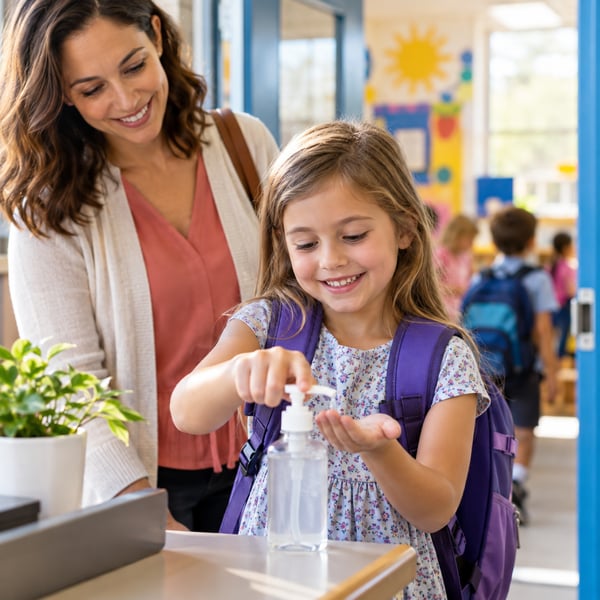
It may seem like a very simple measure, but it remains essential.
Children should learn to wash their hands properly:
- after using the toilet;
- after blowing their nose, coughing or sneezing;
- before eating;
- before handling food;
- whenever their hands are visibly dirty;
- after arriving home, particularly before meals.
Hands should be washed properly with soap and water.
When soap and water are not available, an alcohol-based hand sanitizer can be useful in many situations, provided it is appropriate for the child's age and used correctly.
Handwashing is particularly important in gastrointestinal infections because some infectious agents can spread easily through the fecal-oral route.
Teaching children to cough and sneeze correctly
Good respiratory etiquette should also be taught from an early age.
When coughing or sneezing, children should cover their nose and mouth with a tissue or with the inside of their elbow rather than coughing or sneezing directly into their hands.
The tissue should then be thrown away, and the hands should be washed or sanitized.
These are simple behaviors that can help reduce the spread of respiratory infections.
Does ventilating classrooms really help?
Yes.
Ventilation helps renew indoor air and reduce the concentration of potentially infectious respiratory particles.
Whenever possible and safe, regularly opening doors or windows can help improve air circulation in classrooms and other indoor spaces.
Ventilation does not replace other preventive measures, but it provides an additional layer of protection.
Is it necessary to disinfect everything?
There is no need to try to make the home completely sterile.
Routine cleaning is sufficient in most situations.
When someone is ill, it may be helpful to increase the cleaning of frequently touched surfaces such as:
- door handles;
- faucets;
- light switches;
- tables;
- toys;
- bathroom surfaces.
Rather than excessively disinfecting every object, it is more important to combine good hand hygiene, appropriate cleaning, ventilation and responsible behavior when someone is ill.
Should a child with a cold stay home from school?
Not always.
A child with mild respiratory symptoms, such as a runny nose, sore throat or mild cough, who has no fever and is otherwise well may not need to stay home from school.
The situation is different when the child is clearly unwell.
The child should stay home when they have a fever or when their general condition does not allow them to take part normally in daily activities.
It is also sensible to keep a child at home if they have:
- active vomiting or diarrhea;
- significant malaise;
- marked lethargy;
- difficulty breathing;
- an inability to eat or drink adequately;
- symptoms that prevent normal participation in activities.
After an illness, the child should return when they are well enough to resume their usual activities.
Advice from healthcare professionals and public health authorities, as well as the rules of the school or daycare center, should also be followed.
Vaccination: it is worth checking that everything is up to date
The beginning of the school year is a good opportunity to check that the child's National Vaccination Program schedule is up to date.
Vaccination helps prevent several potentially serious diseases and also contributes to protecting the wider community.
For seasonal vaccines, including influenza vaccination, the latest recommendations from the Portuguese Directorate-General of Health should be followed each season.
Recommendations may change from year to year, so it is important to consult up-to-date information.
Is it possible to “boost the immune system” before going back to school?
This is one of the most common questions at this time of year.
There is no supplement that can guarantee that a child will not catch the viruses circulating at school or daycare.
Normal immune system function depends on several factors, including:
- a varied and balanced diet;
- adequate sleep;
- physical activity;
- adequate hydration;
- recommended vaccination;
- avoiding exposure to tobacco smoke.
Vitamins and other supplements may be necessary in certain situations, particularly when there is a nutritional deficiency or another specific indication.
However, they should not be presented as a guaranteed way of preventing colds, influenza or other infections.
Rather than looking for a product to “boost immunity”, it is more important to support healthy lifestyle habits and identify specific needs when they exist.
Antibiotics do not treat viral infections
A large proportion of respiratory infections in childhood are caused by viruses.
Antibiotics act against bacteria and do not speed up recovery from viral infections.
Unnecessary use of antibiotics can cause adverse effects and contribute to the development of antimicrobial resistance.
Therefore:
- antibiotics left over from previous treatments should not be used;
- medicines prescribed for someone else should not be given to a child;
- the need for an antibiotic should be based on an appropriate clinical assessment.
What can be useful to keep at home?
There is no need to create a large “emergency medicine cabinet”.
However, some basic items may be useful during periods when infections are more common:
- a thermometer;
- saline solution for nasal cleansing;
- oral rehydration solution;
- tissues;
- medicines for fever or pain that are appropriate for the child and used according to the advice of a healthcare professional.
Medicines for cough, cold symptoms, vomiting or diarrhea are not suitable for all ages and should not be used indiscriminately.
When should you seek medical help?
Most childhood infections are mild and resolve on their own.
However, it is important to monitor the child's overall condition and recognize signs that require medical assessment.
Seek medical advice if the child develops:
- difficulty breathing;
- very rapid breathing or increased work of breathing;
- bluish or grayish discoloration of the lips or skin;
- marked lethargy;
- unusual drowsiness or difficulty waking;
- a significant change in behavior;
- seizures;
- an inability or persistent refusal to drink fluids;
- a marked reduction in urine output;
- persistent vomiting;
- blood in vomit or stool;
- severe or persistent abdominal pain;
- signs of dehydration;
- progressive worsening of the child's general condition.
In children under 3 months of age, the presence of fever should prompt assessment by a healthcare professional.
For non-emergency situations in Portugal, you can contact SNS 24 on 808 24 24 24.
In a potentially serious or life-threatening situation, call 112.
How can the pharmacy help?
The pharmacy can play an important role in providing guidance for mild conditions and identifying signs that require medical assessment.
The pharmacist can help to:
- answer questions about fever and other symptoms;
- explain how to perform nasal cleansing correctly;
- provide guidance on hydration and the use of oral rehydration solutions;
- advise on the safe use of medicines appropriate for the child;
- answer questions about vitamins and supplements;
- warn about medicines that are not appropriate for certain age groups;
- provide information on vaccination and immunization;
- identify situations that should be referred for medical assessment.
The aim is not to medicate every infection.
In many situations, rest, hydration, an appropriate diet, nasal cleansing and monitoring the child's progress are the most important measures.
Conclusion
Going back to school increases contact between children and coincides with the approach of a time of year when several respiratory infections become more common.
It is not possible to avoid every virus circulating in a school or daycare center. It is, however, possible to reduce opportunities for transmission and lower the risk of complications.
Proper handwashing, teaching good respiratory etiquette, keeping indoor spaces well ventilated, ensuring vaccination and immunization are up to date, and allowing a child to recover at home when genuinely unwell are simple but important measures.
It is also essential to avoid two extremes: looking for medicines or supplements for every infection or, conversely, dismissing symptoms that require medical assessment.
With reliable information and careful attention to the child's general condition, the return to school can be approached with greater safety and peace of mind.
Sources
This article is based on recommendations and information from the Portuguese Directorate-General of Health (DGS), SNS 24, Portugal's National Vaccination Program, the Livro Azul de Vacinas, the National Institute for Health and Care Excellence (NICE), the European Centre for Disease Prevention and Control (ECDC), and other public health organizations and relevant scientific literature on respiratory infections, pediatric gastroenteritis, dehydration, rotavirus, vaccination and immunization against respiratory syncytial virus.