








Inhalers: Are You Using Them Correctly? Technique, Common Mistakes and Essential Care
Introduction
Inhalers are essential in the treatment of several respiratory diseases, particularly asthma and chronic obstructive pulmonary disease (COPD).
Inhaled therapy allows the medicine to be delivered directly to the airways. In many treatments, this route can achieve the desired effect with lower doses than would be required with systemic administration.
However, there is one essential requirement: the inhaler must be used correctly.
Incorrect technique may result in too little medicine reaching the airways, with part of the dose being deposited in the mouth or oropharynx or lost during administration. As a result, symptoms may remain poorly controlled even when the prescribed medicine is appropriate.
There is another important point: not all inhalers work in the same way. The correct technique depends on the type of device.
Learning how to use an inhaler, having the technique reviewed regularly and discussing any questions with a healthcare professional are therefore part of the treatment itself.
By Paulo Pacheco (Farmacêutico)
Edited by 2026-10-06
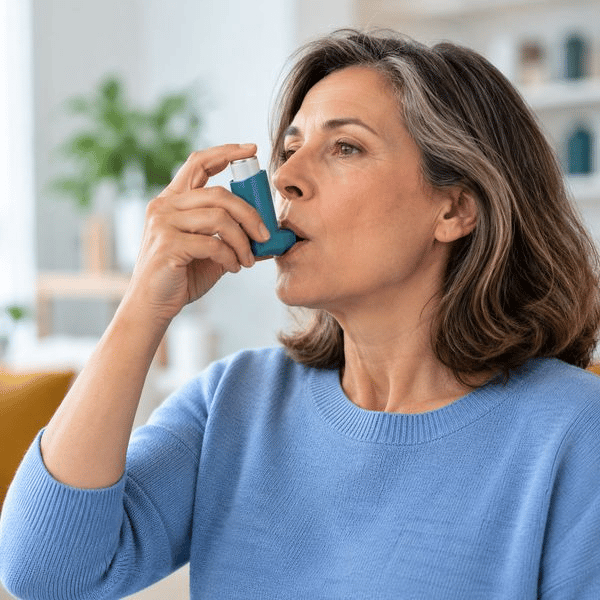
Inhalers: Are You Using Them Correctly? Technique, Common Mistakes and Essential Care
Introduction
Inhalers are essential in the treatment of several respiratory diseases, particularly asthma and chronic obstructive pulmonary disease (COPD).
Inhaled therapy allows the medicine to be delivered directly to the airways. In many treatments, this route can achieve the desired effect with lower doses than would be required with systemic administration.
However, there is one essential requirement: the inhaler must be used correctly.
Incorrect technique may result in too little medicine reaching the airways, with part of the dose being deposited in the mouth or oropharynx or lost during administration. As a result, symptoms may remain poorly controlled even when the prescribed medicine is appropriate.
There is another important point: not all inhalers work in the same way. The correct technique depends on the type of device.
Learning how to use an inhaler, having the technique reviewed regularly and discussing any questions with a healthcare professional are therefore part of the treatment itself.
By Paulo Pacheco (Farmacêutico)
Edited by 2026-10-06
Why is inhaler technique so important?
For an inhaled medicine to have the intended effect, an adequate amount needs to reach the airways.
This depends on several factors:
- correct preparation of the dose;
- correct positioning of the device;
- exhaling before inhalation, when recommended;
- the speed and depth of inhalation;
- coordination between inhalation and dose release, when required;
- the ability to hold the breath after inhalation;
- the characteristics of the inhaler itself.
Errors are common.
Current international recommendations for COPD indicate that more than two-thirds of people using inhaler devices make at least one error when using them.
Common problems include incorrect inspiratory flow, incorrect dose preparation, poor coordination between inhalation and dose release, failure to exhale before inhalation and failure to hold the breath after taking the dose.
Therefore, knowing the name of the medicine or using it every day does not necessarily mean that the technique is correct.
Not all inhalers are the same
There are several types of devices used to deliver medicines by inhalation.
The main types include:
- pressurized metered-dose inhalers (pMDIs);
- dry powder inhalers (DPIs);
- soft mist inhalers (SMIs).
There are also breath-actuated devices and accessories such as spacers, which can be used with certain pressurized inhalers.
Nebulizers are another method of delivering medicines by inhalation and have their own indications and administration techniques.
The medicine itself may also vary. An inhaler may contain a bronchodilator, an inhaled corticosteroid or a combination of different medicines.
For this reason, you should not assume that the technique learned for one device is appropriate for another.
Pressurized inhalers: inhalation must be coordinated with the dose
Pressurized metered-dose inhalers, commonly known as pMDIs, release a measured amount of medicine as an aerosol.
With conventional devices, one of the most important steps is coordinating dose release with inhalation.
In general, the technique involves:
- preparing the device according to its instructions;
- exhaling slowly and comfortably with the inhaler away from the mouth;
- placing the mouthpiece between the lips and creating a good seal;
- beginning to inhale slowly and deeply;
- pressing the inhaler once while continuing to inhale;
- continuing to inhale until the lungs are comfortably full;
- removing the inhaler from the mouth;
- holding the breath for a few seconds, if comfortable;
- exhaling slowly.
Pressurized inhalers should be prepared according to the specific instructions for the device. Shaking before use is essential for pMDIs containing suspension formulations and is commonly recommended as a practical step before using these devices.
Some inhalers also require priming before first use or after they have not been used for a certain period of time.
The specific instructions for each device should therefore always be followed.
Dry powder inhalers: the inhalation technique is different
With dry powder inhalers, or DPIs, the medicine is present as very fine powder particles.
With these devices, the patient's own inhalation helps withdraw and disperse the medicine from the inhaler.
After preparing the dose, the person generally needs to inhale quickly and forcefully through the mouth, while following the specific instructions for that device.
This is an important difference compared with pressurized inhalers, for which inhalation should generally be slower.
Another essential precaution is:
do not exhale into a dry powder inhaler.
Moisture in exhaled air can reach the medicine and interfere with the operation of the device or the dispersion of the powder.
You should therefore exhale with the inhaler away from your mouth and only then place the mouthpiece between your lips and inhale.
What about soft mist inhalers?
Soft mist inhalers, or SMIs, produce a slow-moving aerosol mist compared with that produced by traditional pressurized inhalers.
The technique is also specific to the device.
In general, a slow, deep inhalation is required while the dose is released, followed by a brief breath-hold.
Some devices also require specific preparation before first use.
Once again, the technique should be taught using the exact device that has been prescribed.
Can a spacer help?
Yes, when used with a compatible pressurized inhaler.
A spacer is placed between the inhaler and the mouth. The medicine is released into the spacer before being inhaled.
It can offer several advantages:
- reduce the need to coordinate pressing the inhaler precisely with the start of inhalation;
- make administration easier for children or people with coordination difficulties;
- help improve medicine delivery;
- reduce the amount of medicine deposited in the mouth and oropharynx.
Young children, or other people who cannot use the mouthpiece correctly, may need a face mask attached to the spacer.
It is important to release one actuation at a time into the spacer and use it according to the instructions provided by the healthcare professional and manufacturer.
When a face mask is used to administer an inhaled corticosteroid, the face should also be washed after administration.
Spacers also have their own cleaning and drying instructions, which may vary between models.
Are there steps that are common to most inhalers?
Although the technique always depends on the device, some principles apply to many inhalers.
However, the specific instructions for the inhaler should always take precedence whenever they differ.
Before using an inhaler:
- make sure you are using the correct device and medicine;
- check that doses are still available;
- prepare or load the dose according to the instructions;
- adopt a comfortable position, preferably sitting or standing upright;
- when recommended, exhale slowly and comfortably with the device away from your mouth;
- place the mouthpiece correctly between your lips;
- inhale in the way required for that particular device;
- when recommended for that device, hold your breath for a few seconds after inhalation;
- exhale afterward with the device away from your mouth.
If more than one dose is required, follow the specific instructions for the inhaler regarding preparation and the interval between doses.
What are the most common mistakes?
Some errors can significantly reduce the amount of medicine that reaches the airways.
Common mistakes include:
- failing to exhale before inhalation when this is required;
- exhaling directly into the inhaler;
- failing to create a good seal around the mouthpiece;
- inhaling too quickly with a pressurized inhaler;
- inhaling too weakly through a dry powder inhaler;
- pressing a pressurized inhaler too early or too late;
- stopping the inhalation immediately after releasing the dose;
- failing to hold the breath after inhalation when this is part of the technique;
- preparing the dose incorrectly;
- failing to realize that the device is empty;
- using a technique learned for a different type of inhaler;
- failing to clean or store the device according to the instructions.
A single mistake may appear minor, but when repeated every day it can reduce the effectiveness of treatment.
Should you exhale before using an inhaler?
With many devices, yes.
Before inhalation, you should generally exhale slowly and comfortably, with the inhaler away from your mouth.
This helps make the subsequent inhalation more effective.
This precaution is particularly important with dry powder inhalers because you should not exhale into the device.
There is no need to force the exhalation to the point of discomfort or breathlessness.
Do you need to hold your breath after inhalation?
When recommended for the device, yes.
After inhaling the medicine, holding your breath for a few seconds gives the particles more time to deposit in the airways.
A breath-hold of approximately 5 to 10 seconds, or for as long as is comfortable, is commonly recommended with many devices.
You should not force yourself to hold your breath if this causes significant discomfort.
Do you need to rinse your mouth after using an inhaler?
It depends on the medicine.
This recommendation is particularly important when the inhaler contains an inhaled corticosteroid.
After using it, you should rinse or gargle your mouth with water and spit the water out rather than swallowing it.
This helps reduce local adverse effects associated with inhaled corticosteroids, particularly:
- oral candidiasis, also known as oral thrush;
- hoarseness or dysphonia.
When the medicine is administered through a face mask, the face should also be washed afterward.
Using a spacer with certain inhaled corticosteroids delivered through a pressurized inhaler can also reduce deposition of the medicine in the mouth and oropharynx.
Mouth rinsing does not need to be recommended indiscriminately after every type of inhaler: this advice applies particularly to medicines containing inhaled corticosteroids.
How can you tell whether there is still medicine in the inhaler?
Many devices have a dose counter or dose indicator.
This should be checked regularly.
You should not estimate the number of doses remaining from the sound, weight or sensation produced by the inhaler.
When a counter or indicator is available, it should be used to determine when the device is close to empty.
For devices without a dose counter, follow the manufacturer's instructions or ask your pharmacist how best to keep track of the number of doses used.
How should an inhaler be cleaned?
There is no single rule.
Cleaning depends on the device.
Some mouthpieces can be cleaned in a particular way, while other components require specific care.
With dry powder inhalers, it is particularly important to prevent water or moisture from entering the mechanism. These devices should be cleaned according to the manufacturer's instructions, generally using dry material on the mouthpiece.
You should also not immerse an inhaler in water unless you have first confirmed that this is permitted.
Spacers also have specific cleaning and drying instructions, which may vary between models.
The safest rule is:
always follow the cleaning instructions for the specific device you use.
How should an inhaler be stored?
Inhalers should be stored according to the conditions stated in the package leaflet.
In general:
- protect them from extreme temperatures;
- keep dry powder inhalers protected from moisture;
- avoid storing dry powder inhalers in humid environments such as bathrooms;
- keep devices out of the reach of children;
- keep the mouthpiece protected when the inhaler is not being used;
- do not puncture or expose pressurized canisters to heat or flames;
- regularly check the expiry date and the number of doses remaining.
If the device is dropped, damaged or stops working normally, seek advice before continuing to use it.
If the inhaler “isn't working”, has the medicine stopped working?
Not necessarily.
Before concluding that a stronger medicine or higher dose is needed, it is important to check:
- whether the inhaler is being used correctly;
- whether it still contains doses;
- whether it is being used as often as prescribed;
- whether there are difficulties with treatment adherence;
- whether the device is suitable for the person's abilities;
- whether the disease is actually well controlled.
Current recommendations for asthma and COPD place great importance on checking inhaler technique and treatment adherence before stepping up therapy, when clinically appropriate.
A very useful assessment can therefore be as simple as taking the inhaler to a medical appointment or pharmacy and showing exactly how it is used.
This does not mean that worsening symptoms should automatically be attributed to poor technique. Persistent, progressive or more severe symptoms require clinical assessment.
Do not stop an inhaler prescribed for maintenance treatment on your own
Not all inhalers serve the same purpose.
Some are prescribed for regular maintenance treatment, while others are used for symptom relief or according to specific treatment regimens.
A treatment prescribed for regular use should not be stopped, reduced or changed without professional advice simply because symptoms have improved.
A person may feel well precisely because the treatment is controlling the disease.
Likewise, an increasing need for reliever medication or worsening symptoms may indicate that the respiratory condition is not adequately controlled and should prompt reassessment.
Can you change inhalers while keeping the same medicine?
You should not do so on your own.
Even when two inhalers contain the same active ingredient, the delivered dose, formulation and technique required to use the device may not be directly equivalent.
The choice of inhaler should take several factors into account, including:
- the ability to generate the required inspiratory flow;
- coordination;
- hand strength and dexterity;
- cognitive ability;
- ease of use;
- the person's preferences;
- clinical characteristics;
- the medicine required;
- availability of the treatment in a suitable device.
Whenever the inhaler device is changed, the technique should be taught and checked again.
Is a nebulizer more effective than an inhaler?
Not necessarily.
There is a common belief that nebulized treatment is “stronger”, but this is not generally true.
In the context of home respiratory care, for the administration of bronchodilators and corticosteroids, the Portuguese Directorate-General of Health (DGS) recommends the use of nebulizers only on an exceptional and temporary basis when there is a clear inability to use simpler inhaler devices.
This does not mean that nebulizers do not have specific indications.
They are important in certain clinical situations and for the administration of some medicines, including in conditions such as:
- cystic fibrosis;
- bronchiectasis;
- pulmonary hypertension;
- certain situations following lung transplantation.
They may also be used to administer specific treatments, such as some inhaled antibiotics, dornase alfa, saline solutions or other treatments prescribed for particular clinical situations.
A nebulizer should therefore not automatically be considered “stronger” or “more effective” than an inhaler.
The choice depends on the disease, the medicine, the device and the person's ability to use it correctly.
If you use a prescribed nebulizer, do not change or stop your treatment without medical advice.
Does the environmental impact of inhalers matter?
Yes, although treatment effectiveness, safety and the person's ability to use the device correctly must always take priority.
In general, pressurized metered-dose inhalers have a higher carbon footprint than dry powder inhalers, mainly because of the propellants they use.
In Portugal, expert recommendations suggest that environmental impact may be considered when choosing a device when clinically appropriate alternatives are available.
This does not mean that someone should stop using or change a pressurized inhaler.
A device with a lower environmental impact is only a good alternative if:
- it is clinically appropriate;
- it provides the required treatment;
- the person can use it correctly;
- the change is agreed with a healthcare professional.
Never change inhalers solely for environmental reasons without professional advice.
Where should used inhalers be disposed of?
In Portugal, unused or expired medicines, their packaging and eligible administration accessories covered by the VALORMED scheme can be taken to collection points at participating pharmacies and parapharmacies.
Inhalers covered by the scheme should be returned through this route rather than being discarded indiscriminately with household waste.
However, electrical or electronic equipment and batteries must not be placed in VALORMED collection containers.
Therefore, for electronic equipment or whenever there is uncertainty about how to dispose of a particular device, ask your pharmacist for advice.
Correct disposal helps ensure that medicines and materials are sent for appropriate treatment and reduces the environmental impact associated with waste.
When should you ask for help reviewing your treatment?
Inhaler technique should be reviewed regularly, even if you have been using the same inhaler for many years.
Ask a doctor or pharmacist for advice if:
- you are unsure how to use the device;
- you feel that part of the medicine remains in your mouth;
- you often cough during inhalation;
- you have difficulty coordinating inhalation with dose release;
- you are unable to inhale adequately through a dry powder inhaler;
- you do not know whether the inhaler is empty;
- your symptoms are becoming more frequent;
- you increasingly need reliever medication;
- you wake during the night because of respiratory symptoms;
- a treatment that previously worked seems less effective;
- you develop oral thrush, hoarseness or other treatment-related adverse effects.
Do not wait until your next routine appointment if your condition worsens significantly.
If you experience severe breathlessness, marked difficulty speaking because of breathlessness, bluish discoloration of the lips or skin, an altered level of consciousness, or severe symptoms that do not improve with the medication prescribed for such situations, seek urgent medical care.
In a life-threatening emergency, call 112.
How can the pharmacy help?
The pharmacy can play a particularly important role in helping people use inhalers correctly.
The pharmacist can:
- identify the type of device;
- demonstrate the correct technique;
- ask you to show how you use the inhaler and correct any errors;
- explain the differences between devices;
- answer questions about the dose counter;
- explain cleaning and storage requirements;
- provide guidance on using a spacer;
- remind you to rinse your mouth when the medicine contains an inhaled corticosteroid;
- identify possible difficulties with treatment adherence;
- advise on the return of used inhalers;
- refer you for medical assessment when symptoms suggest inadequate disease control.
Teaching inhaler technique once is not enough.
Technique should be reviewed regularly and, whenever possible, assessed through practical demonstration.
Rather than simply asking “Do you know how to use your inhaler?”, it is much more useful for the person to bring the device with them and show exactly how they use it.
Conclusion
Using an inhaler may seem simple, but small errors can significantly reduce the amount of medicine that reaches the airways.
The most important point is to understand that there is no single technique that applies to every inhaler.
Pressurized metered-dose inhalers, dry powder inhalers and soft mist inhalers require different ways of preparing the dose and inhaling the medicine. Spacers can make administration easier in certain situations, and cleaning and storage requirements also vary between devices.
Inhaler technique should be learned with a healthcare professional, demonstrated in practice and reviewed regularly.
Using the correct device, with the correct technique and according to the prescribed treatment regimen, can make the difference between a treatment that appears ineffective and a respiratory disease that is adequately controlled.
Responsible use also continues after the final dose: storing the device correctly, not changing treatment without professional advice and returning used inhalers through the appropriate disposal channels are all part of safe and responsible inhaler use.
Sources
This article is based on recommendations and information from the Portuguese Directorate-General of Health (DGS), INFARMED, the Portuguese Society of Pulmonology (SPP), the Portuguese Association of General and Family Medicine and its Respiratory Diseases Study Group (APMGF/GRESP), the Portuguese Pharmaceutical Society, the Global Initiative for Asthma (GINA 2026), the Global Initiative for Chronic Obstructive Lung Disease (GOLD 2026), VALORMED, and Portuguese scientific literature and consensus recommendations on inhaler technique, nebulizer use, the safety of inhaled medicines and the environmental impact of inhaler devices.