











Irritable Bowel Syndrome: Symptoms, Causes and How to Manage It
Introduction
Irritable bowel syndrome, also known as IBS, is one of the most common gastrointestinal conditions. Many people still use the expression “irritable colon”, but the more accurate and currently preferred term in medical contexts is irritable bowel syndrome.
It is a chronic, benign condition, with no visible structural lesions in the intestine, but it can cause very uncomfortable symptoms and significantly affect quality of life.
Abdominal pain, abdominal bloating, gas, diarrhea, constipation, or alternating diarrhea and constipation are some of the most common complaints.
Although it is not an inflammatory bowel disease, is not considered a premalignant condition and is not associated with permanent lesions of the digestive tract, irritable bowel syndrome should be properly assessed. Some symptoms may be similar to those of other digestive diseases, including conditions that require medical investigation.
With appropriate information, identification of triggering factors and an individualised plan, it is possible to reduce symptoms and improve daily life.
By Paulo Pacheco (Farmacêutico)
Edited by 2026-08-03
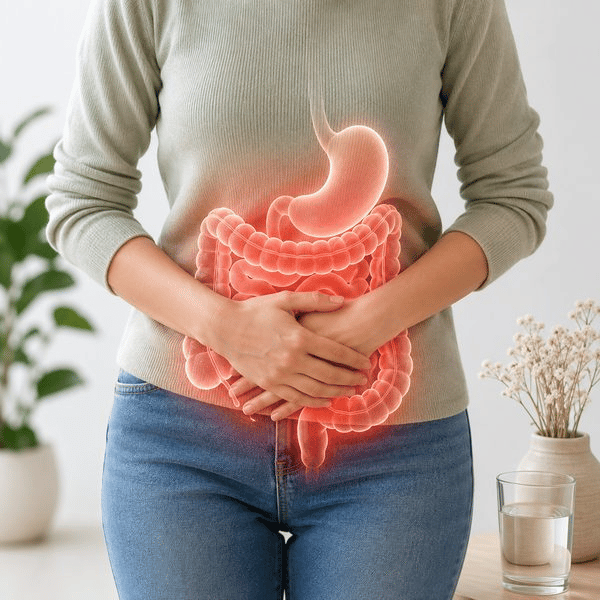
Irritable Bowel Syndrome: Symptoms, Causes and How to Manage It
Introduction
Irritable bowel syndrome, also known as IBS, is one of the most common gastrointestinal conditions. Many people still use the expression “irritable colon”, but the more accurate and currently preferred term in medical contexts is irritable bowel syndrome.
It is a chronic, benign condition, with no visible structural lesions in the intestine, but it can cause very uncomfortable symptoms and significantly affect quality of life.
Abdominal pain, abdominal bloating, gas, diarrhea, constipation, or alternating diarrhea and constipation are some of the most common complaints.
Although it is not an inflammatory bowel disease, is not considered a premalignant condition and is not associated with permanent lesions of the digestive tract, irritable bowel syndrome should be properly assessed. Some symptoms may be similar to those of other digestive diseases, including conditions that require medical investigation.
With appropriate information, identification of triggering factors and an individualised plan, it is possible to reduce symptoms and improve daily life.
By Paulo Pacheco (Farmacêutico)
Edited by 2026-08-03
Irritable bowel syndrome or irritable colon?
In Portugal, the expression “irritable colon” is still familiar to the public, but it is less precise.
The term irritable bowel syndrome is preferable because this condition does not involve only the colon. IBS is related to changes in how the intestine functions and how it communicates with the nervous system.
Today, IBS is considered a disorder of the interaction between the gut and the brain. This means that the intestine may become more sensitive and overreact to stimuli or changes that, in other people, would cause little or no discomfort, such as gas, intestinal distension, certain foods, stress, hormonal changes or changes in bowel movement patterns.
This explanation is important: IBS is not “imaginary”, it is not simply “nerves”, and it should not be dismissed. It is a real condition, with complex biological mechanisms.
What is irritable bowel syndrome?
Irritable bowel syndrome is a chronic disorder of intestinal function, characterized by recurrent abdominal pain associated with changes in bowel habits.
These changes may include:
- diarrhea;
- constipation;
- alternating diarrhea and constipation;
- urgency to have a bowel movement;
- a feeling of incomplete evacuation;
- abdominal bloating;
- gas;
- changes in stool form or frequency.
Unlike conditions such as Crohn’s disease or ulcerative colitis, IBS does not, by itself, cause persistent intestinal inflammation, ulcers or structural lesions identifiable on routine tests.
However, this does not mean that the symptoms are mild. In some people, irritable bowel syndrome interferes with eating out, traveling, work, school, sleep, social life and emotional well-being.
Is it a common condition?
Yes. Irritable bowel syndrome is one of the most common gastrointestinal conditions seen in primary care and gastroenterology consultations.
The exact prevalence varies widely between studies, countries and diagnostic criteria used. Estimates based on the Rome IV criteria tend to be lower than older estimates, because these criteria are more restrictive.
Therefore, rather than focusing on a single number, it is more important to understand that IBS is common, can affect adults of different ages, and is often underdiagnosed or confused with “poor digestion”, “colitis”, “intolerances” or stress.
What are the main symptoms?
Symptoms vary from person to person and may change over time. Some people have long periods of improvement and phases of worsening, often associated with stress, dietary changes, travel, gastrointestinal infections or changes in routine.
The most common symptoms include:
- abdominal pain or cramps;
- abdominal bloating;
- feeling bloated;
- excess gas;
- diarrhea;
- constipation;
- alternating loose stools and hard stools;
- mucus in the stool;
- feeling of incomplete evacuation;
- urgency to go to the toilet;
- worsening after some meals;
- partial relief of pain after having a bowel movement, in some people.
Mucus in the stool can occur in IBS, but blood in the stool should not be attributed to irritable bowel syndrome without medical assessment.
Are there different types of IBS?
Yes. Irritable bowel syndrome can be classified according to the predominant stool pattern.
The main subtypes are:
IBS with predominant diarrhea
In this subtype, looser stools, frequent bowel movements or bowel urgency predominate.
IBS with predominant constipation
In this case, hard stools, straining, a feeling of incomplete evacuation or fewer bowel movements than usual predominate.
Mixed IBS
This is characterized by alternating periods of diarrhea and constipation.
Unclassified IBS
This applies when symptoms are present but do not clearly fit into one of the previous patterns.
This classification is useful because treatment should be adapted to the predominant symptom. A person with frequent diarrhea does not need the same approach as someone with persistent constipation.
Why does irritable bowel syndrome occur?
The exact cause of IBS is still not fully understood. In most cases, there is no single cause, but rather a combination of factors.
Mechanisms involved may include:
- increased sensitivity of the intestine to pain or bloating;
- changes in intestinal motility;
- changes in communication between the gut and the brain;
- changes in the gut microbiota;
- previous gastrointestinal infections;
- stress, anxiety or emotional changes, which can worsen symptoms;
- insufficient sleep;
- hormonal changes;
- individual or family predisposition;
- increased sensitivity to certain foods;
- mild immune changes in some cases.
Some people develop symptoms after gastroenteritis. This is known as post-infectious irritable bowel syndrome.
In other cases, symptoms worsen during periods of greater stress, travel, irregular sleep, hormonal changes or dietary changes.
Is IBS a serious disease?
Irritable bowel syndrome is considered a benign condition because it is not associated with permanent structural lesions of the intestine, is not considered a premalignant condition and does not progress to inflammatory bowel disease, such as Crohn’s disease or ulcerative colitis.
Even so, some digestive symptoms may be similar to those of other diseases. Therefore, signs such as blood in the stool, unexplained weight loss, anemia, persistent fever, nighttime diarrhea or a recent and persistent change in bowel habits should be assessed by a doctor.
Although it is benign in most cases, IBS can be very limiting. Some people stop eating out, avoid traveling, worry about not finding a toilet, or live with pain, discomfort and unpredictability.
For this reason, irritable bowel syndrome deserves proper assessment, guidance and treatment.
How is it diagnosed?
The diagnosis should be made by a doctor, based on symptoms, medical history, physical examination and absence of warning signs.
Today, IBS should not be seen only as a diagnosis made “when all tests are normal”. When symptoms are typical and there are no warning signs, the diagnosis can be clinical, with targeted assessment.
The international Rome IV criteria define IBS as recurrent abdominal pain, on average at least 1 day per week in the last 3 months, associated with at least two of the following:
- related to defecation;
- associated with a change in stool frequency;
- associated with a change in stool form or appearance.
Symptoms should have started at least 6 months before diagnosis.
In clinical practice, the doctor may request tests if there are doubts, risk factors or warning signs. These tests may include blood tests, screening for celiac disease, assessment of inflammation, stool tests, fecal calprotectin or colonoscopy, depending on age, symptoms and medical history.
Which conditions can look like IBS?
Some diseases can cause symptoms similar to irritable bowel syndrome. For this reason, self-diagnosis is not advisable.
Conditions that may have similar symptoms include:
- celiac disease;
- lactose intolerance;
- inflammatory bowel disease, such as Crohn’s disease or ulcerative colitis;
- intestinal infections;
- side effects of medicines;
- thyroid disorders;
- endometriosis;
- bile acid malabsorption;
- colorectal cancer, especially when warning signs are present;
- other food intolerances or sensitivities.
Having symptoms compatible with IBS does not mean that there is a serious disease, but it also does not mean that the diagnosis should be assumed without appropriate assessment.
Warning signs: when should you seek medical help?
You should seek medical assessment if you have persistent, recurrent, new or progressive bowel symptoms.
It is particularly important to seek help if there is:
- blood in the stool;
- black or very dark stools;
- unexplained weight loss;
- anemia;
- persistent fever;
- persistent vomiting;
- diarrhea during the night;
- severe, localized or progressive abdominal pain;
- persistent abdominal mass or swelling;
- onset of symptoms after the age of 50;
- a recent and persistent change in bowel habits;
- symptoms that wake you during the night;
- family history of colorectal cancer, inflammatory bowel disease or celiac disease;
- progressive worsening despite self-care measures.
These signs do not necessarily mean that there is a serious disease, but they justify medical assessment to rule out other causes.
In Portugal, you can contact SNS 24 on 808 24 24 24 for guidance. In case of intense or concerning symptoms, you should seek medical care.
Treatment: is there a cure?
Irritable bowel syndrome does not have a single cure that works for everyone. The aim of treatment is to reduce symptoms, improve quality of life and help the person recognize and manage triggering factors.
Treatment should be individualized, because IBS can present in very different ways.
In most cases, the approach may include:
- education about the condition;
- identification of triggering factors;
- dietary changes;
- adequate hydration;
- physical activity;
- improvement of sleep;
- stress management;
- soluble fiber, when appropriate;
- medicines directed at symptoms;
- psychological support in selected cases.
The most important point is to avoid extreme solutions or promises of a quick cure. IBS requires a consistent approach, adapted to the person and to the predominant symptom.
Diet and IBS: where should you start?
Diet can influence symptoms, but there is no universal diet for everyone with irritable bowel syndrome.
Before making major dietary restrictions, it may be useful to start with simple measures:
- eat regular meals;
- eat slowly;
- avoid very large meals;
- reduce very fatty foods if they worsen symptoms;
- limit alcohol, coffee and caffeinated drinks if they are triggers;
- avoid excessive soft drinks or carbonated drinks;
- drink water throughout the day;
- observe individual tolerance to fiber;
- keep a diary of symptoms, foods, stress and sleep for a few weeks.
The aim is not to remove foods unnecessarily, but to understand patterns. Excessive restrictions can make the diet unbalanced, increase anxiety around food and make social life more difficult.
Fiber: can it help or make symptoms worse?
Fiber can help, but it depends on the type of fiber and the subtype of IBS.
In people with constipation, soluble fiber, such as psyllium, may help improve stool consistency and make bowel movements easier. It should be introduced gradually and accompanied by adequate water intake.
On the other hand, large amounts of insoluble fiber, such as wheat bran, may worsen gas, abdominal bloating or pain in some people.
For this reason, it is not enough to say “eat more fiber”. Fiber should be chosen and adjusted according to symptoms and individual tolerance.
Low-FODMAP diet: when does it make sense?
The low-FODMAP diet is a dietary approach with evidence for controlling IBS symptoms in some people.
FODMAP is an English acronym for certain fermentable carbohydrates that may be poorly absorbed in the intestine and cause gas, abdominal bloating, pain or changes in bowel habits in sensitive people.
These compounds are present in many foods, including some vegetables, fruits, cereals, legumes, dairy products and sweeteners.
However, the low-FODMAP diet should not be seen as a “healthy” diet for everyone or as a diet to follow forever.
Ideally, it should be supervised by a dietitian and carried out in three phases:
- a short restriction phase;
- gradual reintroduction of foods;
- personalization of the diet according to individual tolerance.
The aim is to identify the main triggers while keeping the diet as varied as possible. Following this diet for a prolonged period without guidance can lead to unnecessary restrictions and nutritional imbalance.
Lactose, gluten and other foods: do they need to be removed?
Not everyone with IBS needs to remove lactose, gluten or other food groups.
Some people may have lactose intolerance, celiac disease or sensitivity to certain foods, but this should be assessed case by case.
It is important not to start a gluten-free diet before discussing it with a doctor, especially if celiac disease is suspected. Removing gluten before testing can make diagnosis more difficult.
The best approach is to identify individual tolerances, avoid unnecessary restrictions and ensure that the diet remains complete, varied and balanced.
Stress, sleep and the gut-brain axis
Stress does not “create” irritable bowel syndrome, but it can worsen symptoms.
The gut and the brain communicate constantly through what is known as the gut-brain axis. Therefore, emotions, sleep, anxiety, pain, the microbiota and intestinal motility can influence one another.
Useful strategies may include:
- regular physical activity;
- adequate sleep;
- relaxation techniques;
- diaphragmatic breathing;
- mindfulness;
- psychotherapy in selected cases;
- cognitive behavioral therapy;
- gut-directed hypnotherapy, when available.
These interventions do not mean that IBS is “psychological”. They simply mean that symptom control can benefit from an integrated approach.
Medicines and supplements: what can help?
Medicines and supplements should be chosen according to the predominant symptom and, ideally, with guidance from a healthcare professional.
Depending on the case, the following may be considered:
- antispasmodics for cramps and abdominal pain;
- soluble fiber, such as psyllium, in cases of constipation;
- laxatives, when constipation is persistent;
- antidiarrheal medicines in selected cases of diarrhea;
- medicines directed at the predominant symptom;
- probiotics, in some cases.
Probiotics may help certain people with IBS, but results are variable. The benefit depends on the type of probiotic, the dose, the duration of use and the predominant symptoms. There is no probiotic that is universally effective for all cases.
Prolonged self-medication should be avoided, especially if symptoms are new, intense, persistent or accompanied by warning signs.
What can be done at the pharmacy?
The pharmacy can play an important role in supporting people with symptoms compatible with IBS, especially when there is already a medical diagnosis.
The pharmacist can help to:
- distinguish mild symptoms from warning signs;
- guide the choice of suitable products for gas, cramps, diarrhea or constipation;
- explain how to use soluble fiber;
- clarify doubts about probiotics;
- warn about drug interactions;
- review medicines that may worsen intestinal symptoms;
- advise on hydration, diet and lifestyle habits;
- refer for medical assessment when necessary.
The pharmacy does not replace medical diagnosis, but it can help with follow-up and with the safe use of medicines and supplements.
What should you avoid?
Some behaviors can delay diagnosis or worsen symptoms.
You should avoid:
- assuming that all symptoms are “nerves”;
- following very restrictive diets without supervision;
- cutting out gluten or lactose without appropriate assessment;
- using laxatives or antidiarrheal medicines for long periods without guidance;
- ignoring blood in the stool, weight loss or anemia;
- using food tests without clinical validation;
- taking antibiotics without a prescription;
- changing several supplements at the same time, without understanding what helps or worsens symptoms.
IBS requires observation, individualization and consistency. What works for one person does not always work for another.
Living with irritable bowel syndrome
Living with IBS can be frustrating, especially when symptoms are unpredictable. However, many people are able to control the condition better with appropriate strategies.
It may help to:
- keep regular meal and sleep schedules;
- practice physical activity consistently;
- identify food triggers without making excessive restrictions;
- plan travel or meals out with some advance preparation;
- manage stress and anxiety;
- seek medical follow-up if symptoms are frequent;
- reassess the treatment plan if it stops working.
IBS can vary throughout life. For this reason, treatment should be adjusted whenever necessary.
Conclusion
Irritable bowel syndrome is a common, chronic and benign condition, but it can have a major impact on quality of life.
The expression “irritable colon” is still used, but the more accurate term is irritable bowel syndrome, because the condition involves intestinal function and communication between the gut and the brain.
Diagnosis should be made by a healthcare professional, especially to rule out warning signs and other digestive diseases. Treatment involves an individualized approach, which may include diet, soluble fiber, stress management, physical activity, medicines directed at symptoms and professional support.
With accurate information and appropriate follow-up, it is possible to reduce symptoms and regain greater comfort, confidence and quality of life.
Sources
This article is based on recommendations and information from national and international organizations such as SNS24, the Portuguese Society of Gastroenterology, the Rome Foundation, the National Institute for Health and Care Excellence (NICE), the British Society of Gastroenterology (BSG), the American College of Gastroenterology (ACG), the National Institute of Diabetes and Digestive and Kidney Diseases (NIDDK), the National Health Service (NHS), Monash University FODMAP, the World Gastroenterology Organisation (WGO), and scientific literature on irritable bowel syndrome, Rome IV criteria, disorders of gut-brain interaction, low-FODMAP diet, soluble fiber and symptomatic treatment of IBS.